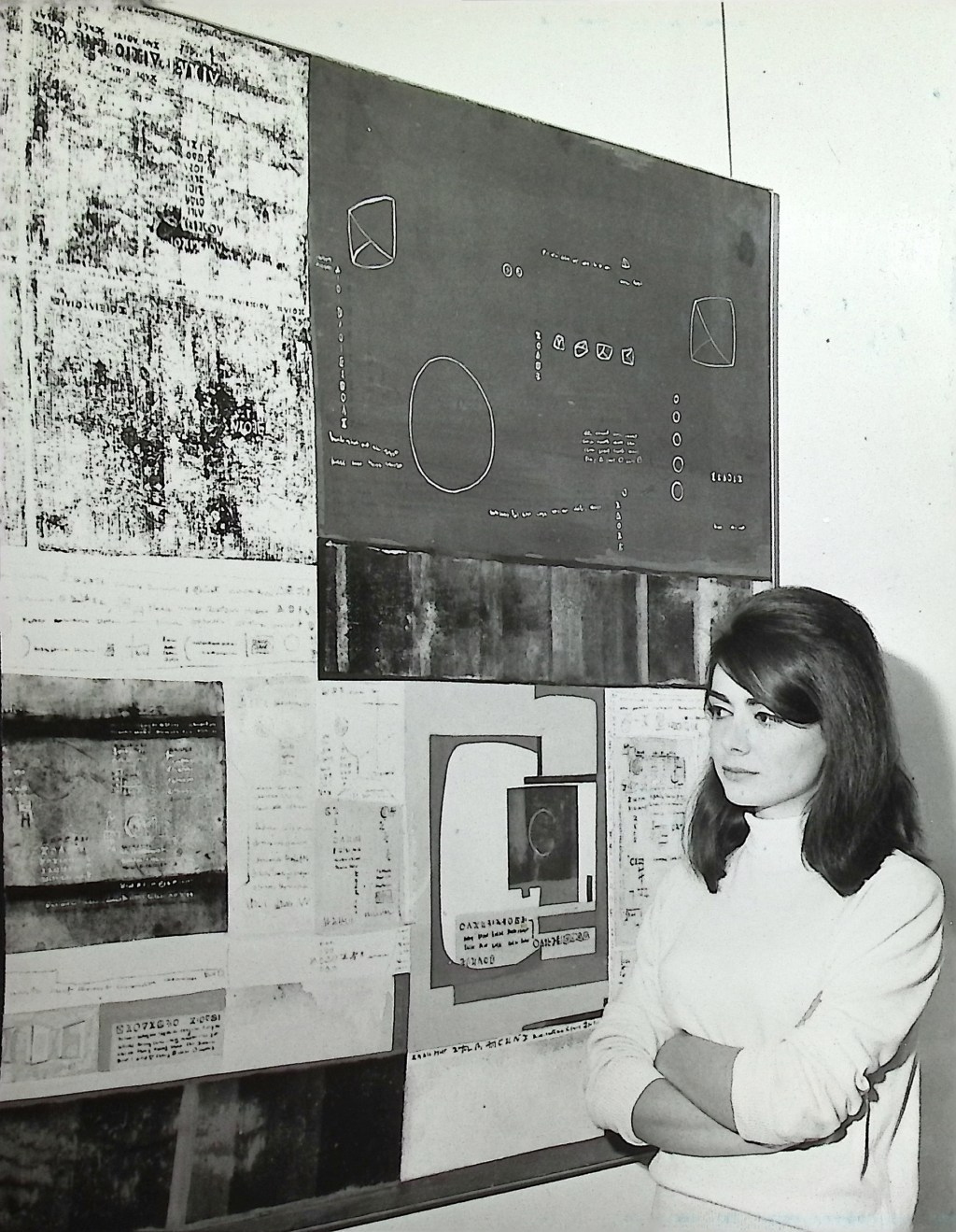
Laura Grisi, Galleria Errepi, Bologna 1964, Courtesy Laura Grisi Estate, Roma e P420 Bologna.
“My purpose in Rainbow (1968) was to create a horizon at eye level, traversing the four walls of a room, and making visible all the colors of the spectrum that the air, which is colorless, lets pass through. I obtained this effect by shining a light through a prism, which is the simplest, most elementary way to decompose the colors of the spectrum. What I wanted was to have a rainbow inside a room.” (Cit. Laura Grisi)
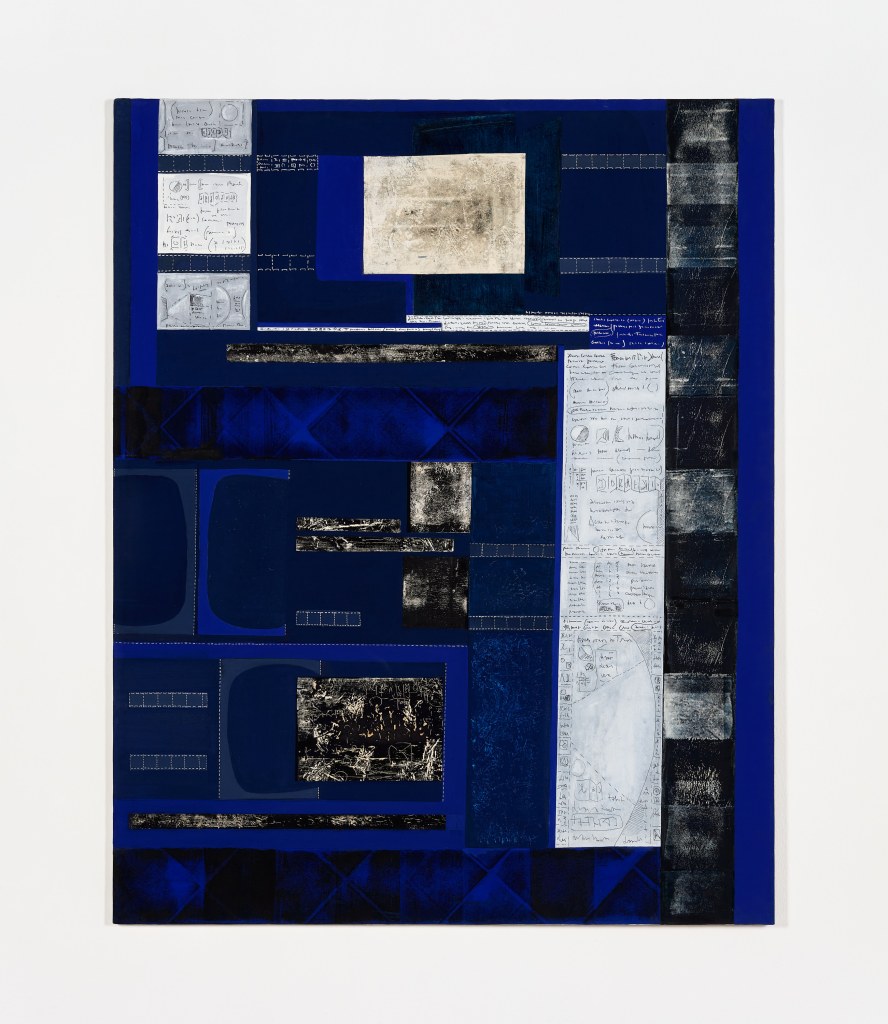
Laura Grisi, Senza titolo, 1964, Courtesy Laura Grisi Estate, Roma e P420, Bologna Foto Carlo Favero.
Laura Grisi’s journey, artistic and in remote places, crosses boundless geographies. Considered one of the representatives of Pop Art, her work does not slide into a defined vertical space but rather transcends it, leaving a gaze that subverts our perception.
Her solo exhibition “The Endless Diagram” was presented at the P420 Gallery in Bologna, curated by Marco Scotini.
The exhibition has shown a series of unseen works, created by the artist in the early 1960s, in dialogue with works from the following decade.
Grisi debuted in 1964 in Rome, at that time she “condensed abstract sensations into images.” She trained in Paris at the École des Beaux-Arts, read extensively, and worked in the Russian “Dobuzhinskys” theatrical atelier, learning fiction and how to reinvent non-existent materials, leading to her work “Neon Paintings.” She became passionate about geometry, logic, gravity, and relativity.
Back in Rome, she met Folco Quilici. They depart together: the Andes, Bolivia, Argentina, Buenos Aires, and then Africa and Polynesia, in contact, through her focal lens, with disappearing cultures, practices, and ancestral rituals. During these years, she photographes natural phenomena and later simulates their presence in a space: monsoons in Asia, rain on atolls, and optical refraction in the Chad desert.
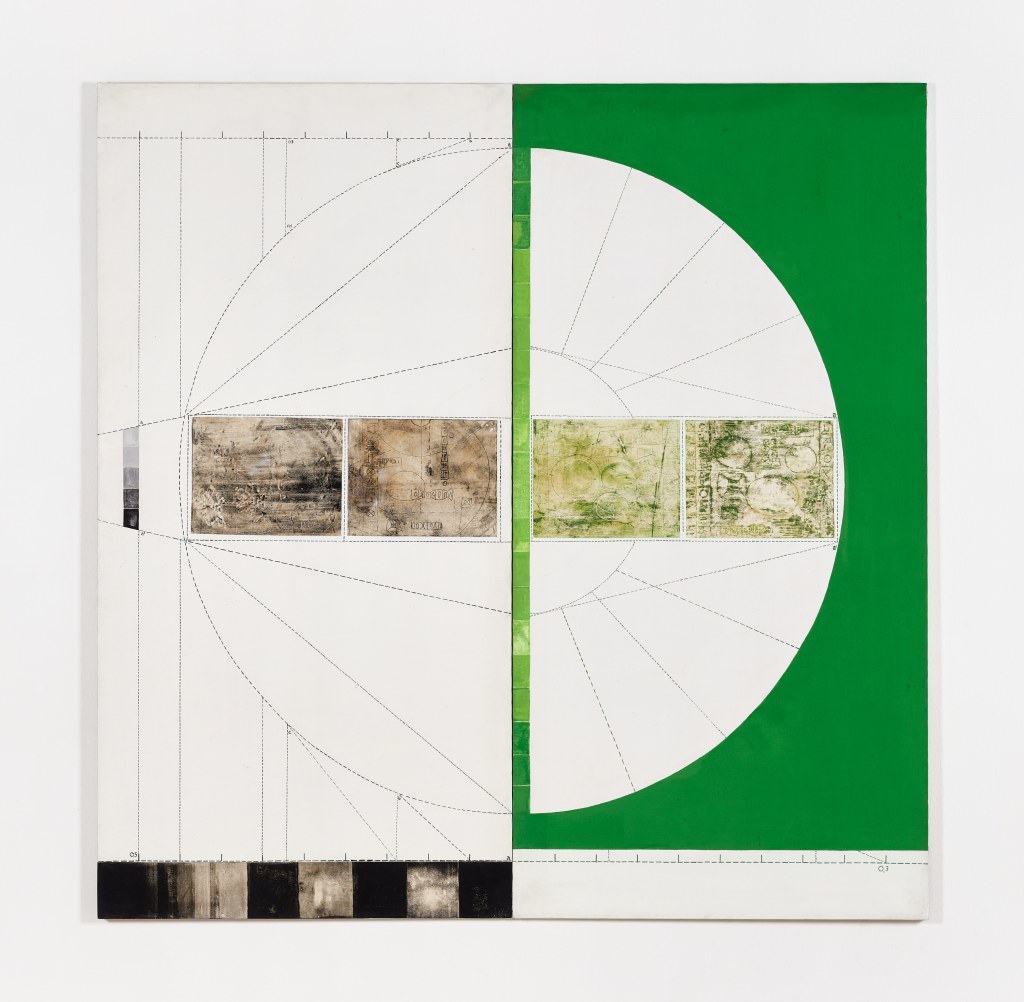
Laura Grisi, Wide Angle, 1965, Courtesy Laura Grisi Estate, Roma e P420, Bologna Foto Carlo Favero.
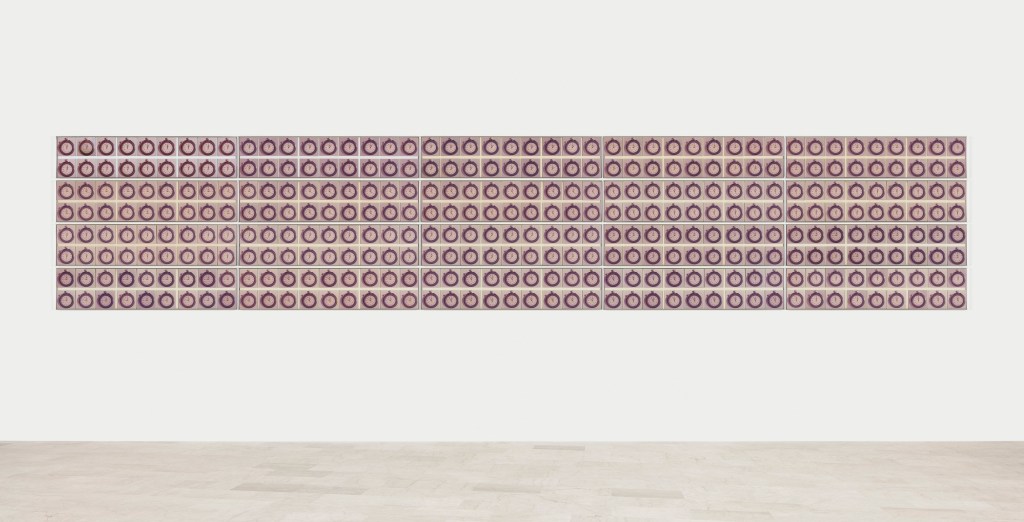
Laura Grisi, Hypothesis about Time (Ipotesi sul tempo), Courtesy Laura Grisi Estate, Roma e P420, Bologna -Foto Carlo Favero.
Back to Italy, she developes studies in which an object, a space and a natural phenomenon, like air or wind, are never univocal but in motion, represented through musical notes, graphic signs, and numbers that the artist deconstructs like a game of mirrors, through processes of mathematical permutation that lead to infinite combinations.
In works such as Scrittura n.5 or Parentesi, currently on view at Galleria P420, our visual-pictorial perception—almost in misty colors—merges on canvas with the representation of numbers, which are the essence of things, looked at as they are, enclosed within suspended frames. Yet one within another, they evoke, like hieroglyphs, a mysterious order which lies at the centre.
In Hypothesis about Time (1975), a stopwatch is photographed 360 times, multiplying a single second of time, thus overturning the illusion of a linear order: “The future becomes a thing of the past.”
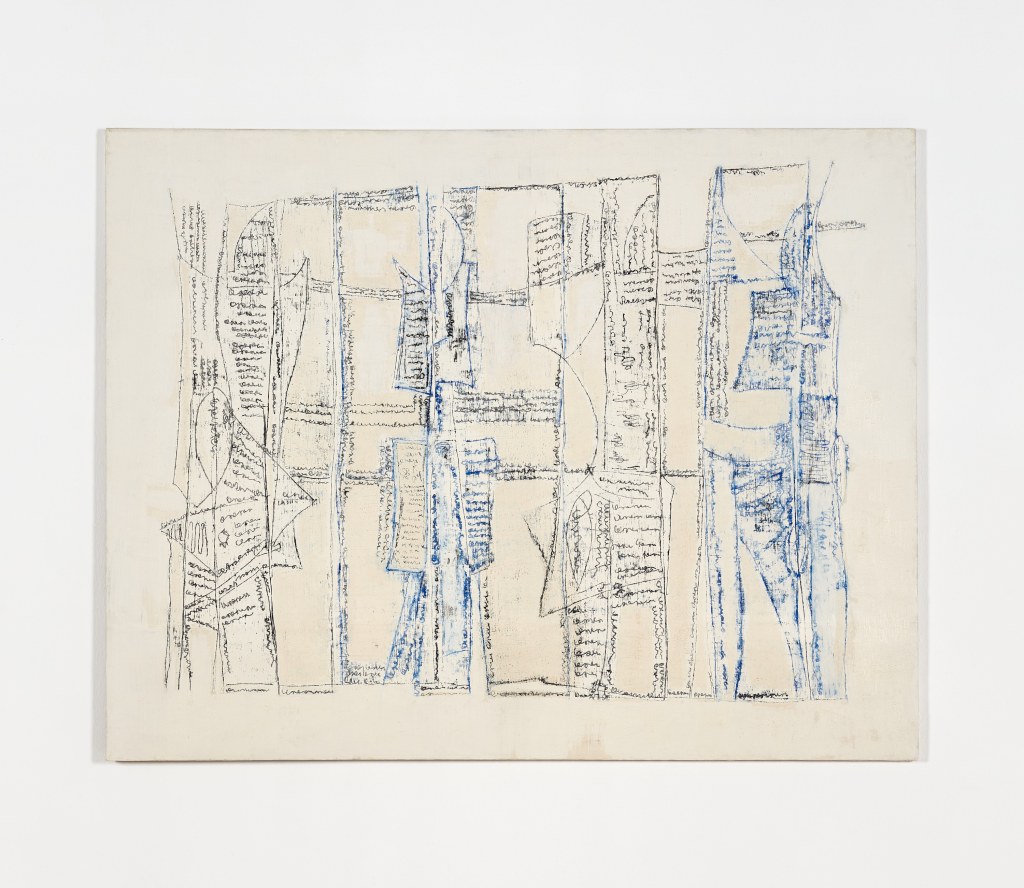
Laura Grisi, Senza titolo, 1964, Courtesy Laura Grisi Estate, Roma e P420, Bologna Foto Carlo Favero.
The diagram is the artist’s language—between reason and instinct—that casts a light on the mutable nature of time and space, it carries every measure, every vision.
The artist (Rhodes 1939 – Rome 2017) participated in the 2022 Venice Biennale and exhibited at MAMCO and Muzeum Susch. Her works are part of Tate Gallery and the Centre Pompidou permanent collections.

 inbetween explorations
Lascia un commento