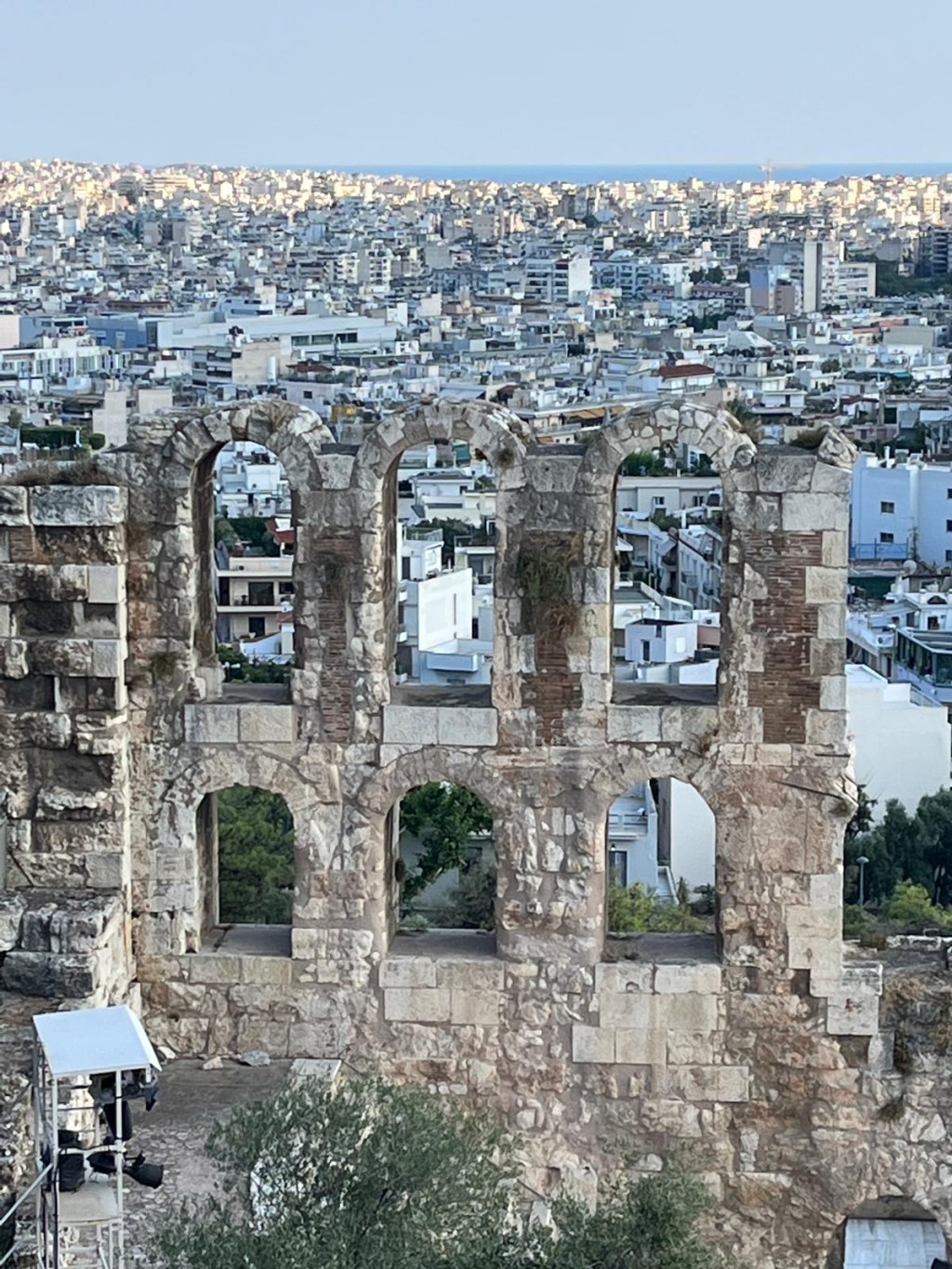
Ph. Credits Paola Zehender
“As you set out for Ithaka
hope your road is a long one,
full of adventure, full of discovery.
Laistrygonians, Cyclops,
angry Poseidon-don ‘t be afraid of them….”(from Ithaka by Konstantinos Kavafis-Greek Poet).
The word Agape in Greek means Love.
It’s no coincidence it was chosen for a place of closeness.
Once in Athens, I always go back to the Summers when, with family and friends fond of Greece, we would always spend a few days in town.
In this symbolic city the tale of the world’s first democracy is renewed everyday. The bustling capital, with it’s overwhelming traffic, even for Athenians, somehow feels nostalgic for a past era.
But leaving behind the imaginific and immersing ourselves in the city, each district has it’s life “down here” reflecting shadows and light.
The hoods near the archaeological trail are Plaka, Monastiraki, Thisseio, and Kolonaki, the latter, ever since, home to the Greek upper class. Heading west, Psiri-Metaxourgeio, Gazi, and Keramikos, places where the city’s reality reveals also ethnic coexistence, with refugees and marginalized people, as well as eastern markets such as the Varvakeios, known for it’s spices, meat and fish. Going further north you meet the neighborhoods of Kypselis, Ambelokipi, and Patissia.
Whenever I am in town, I try to visit at least one of its many archaeological sites, just to name a few: The Acropolis and the Parthenon, the Agora, the Temple of Hephaestus, the Theatre of Dionysus, the Temple of Zeus, Plato’s Academy, Hadrian’s Arch, the Panathenaic Stadium, the Kerameikos and except the Temple of Poseidon at Cape Sounion, just outside the city, perched above the sea, all other sites are easy reach by walking distance or metro.
I have only a few days, yet I decide to pay a visit to some of it’s must-see museums: the National Archaeological Museum—this is a cult place and will soon be renovated. It’s permanent collection displays more than 11,000 objects, offering the visitor a panorama of ancient Greek culture.
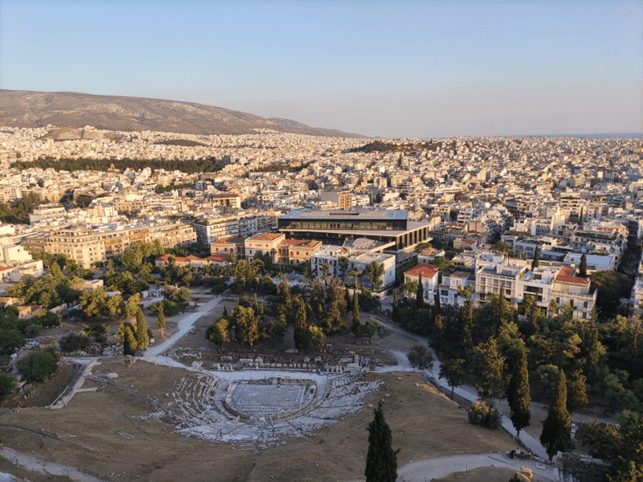
Ph. Credits Giacomo S.-A view from The Acropolis.
Another must-see is the Acropolis Museum, here many of the exhibits come from the hills beneath the Parthenon. The list continues with the Cycladic Art Museum, this is a gem: a truly well-curated collection for adults and kids, just a short walk from the Greek Parliament, showing the ancient history of the islands in the Aegean, with many objects of Cycladic art from the 3rd millennium BC. Then there’s the Benaki’s, with a magnificent section of Islamic Art and Greek Art and Folklore.
The list doesn’t cover them all.
The Contemporary art offer is also rich. After the severe crisis of 2008, the city found it’s stride. Among the places to visit: The EMST, National Museum of Contemporary Art, the Basil and Elise Goulandris Foundation, the National Gallery, and the Stavros Niarchos Foundation, designed by Renzo Piano. It’s a public space that hosts, in addition to the National Library, events within it’s huge open-air space. (You can get there via free shuttle from Syntagma Square).
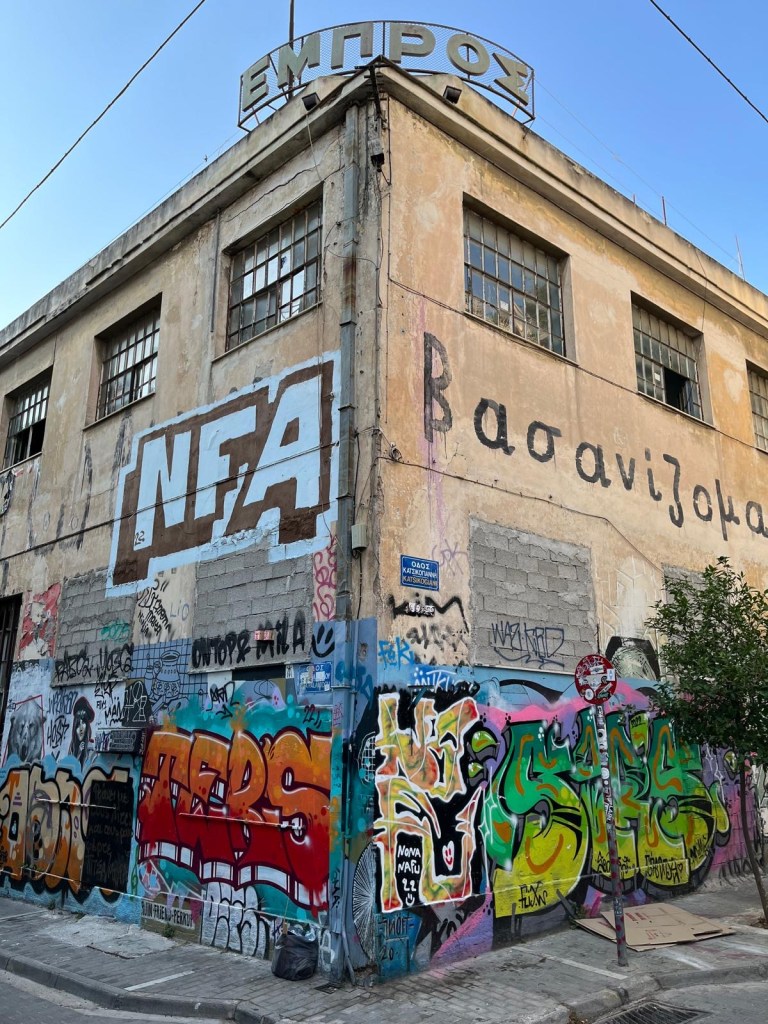
Ph. Credits Paola Zehender
I end up meeting up in Kypseli with Ale and Phil both artists.
We reconnect over a Greek coffee and a slice of banana loaf in a local café.
Kypseli was once a residential area for the upper greek middle class, with neoclassical and modernist buildings. Abandoned during the economic crisis of the 1970s by many families who lived there, fell into various degrees of decay and became a place considered dangerous at night.
Today and for several years now, it has been experiencing a particular renaissance infused by art and young hipsters. But it keeps it’s own life: Kafeneions and souvlaki tavernas along the Fokionos Negri Square, go in pair with pop up Art galleries, ceramic workshops and concept stores.
We talk about the unpredictable twists that lead you to movement, and the way this city is never just the sum of its parts, but, mysteriously, much more.
Phil has collaborated with several galleries in town and has recently closed his Solo exhibition on the island of Antiparos.
His wisdom as an “immature artist,” as he defines himself, opens up a debate on the many contradictions, idiosyncrasies, and myths of our society, leading the observer through mediums such as: sculptures, paintings, textiles, prints, and ceramics.
Whether a deliberate childish trait or sophisticated, he allows space for experiment and play.
Ale is a multifaceted creative. A background as designer then also teacher in prestigious art and fashion institutions. Landing in Athens, she has re-imagined her path, creating art installations with her side project ADP. Her artworks initiate a dialogue translating scupltures and installations into functional objects, forging collaborations with Athenian craftmans and renowned architects.
Her gaze is always in tune with her inner essence.
The thread of their art, which changes over time, intertwines with the rhythm of this city.
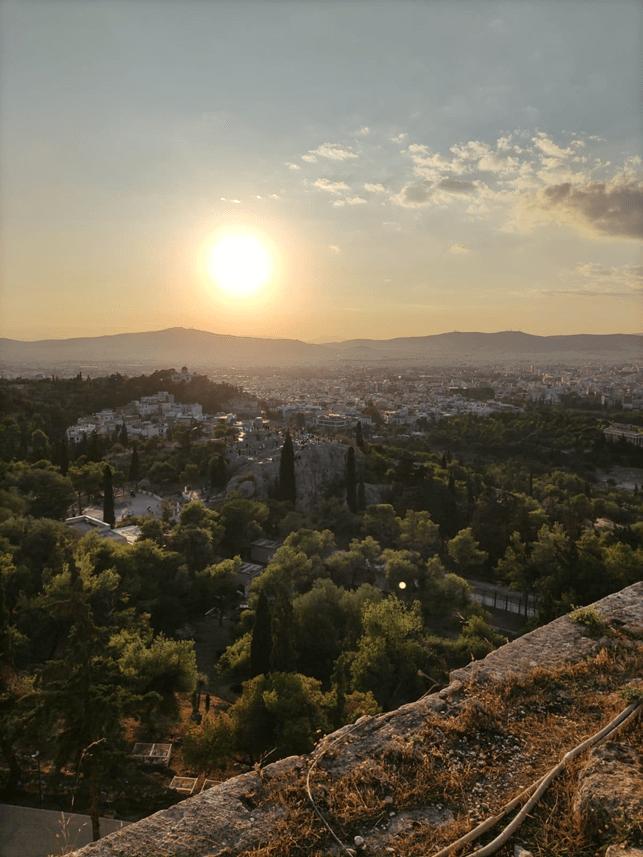
Ph. Credits Carlos S.
It’s evening, I say goodbye. Tomorrow I am meeting my dear friend Elli in Alimos, along the Athenian coast, but early in the morning, I’d like to head up to Lycabettus Hill to enjoy the light of Attica and the endless view of the city.
See you soon, Filia.

 inbetween explorations
Lascia un commento